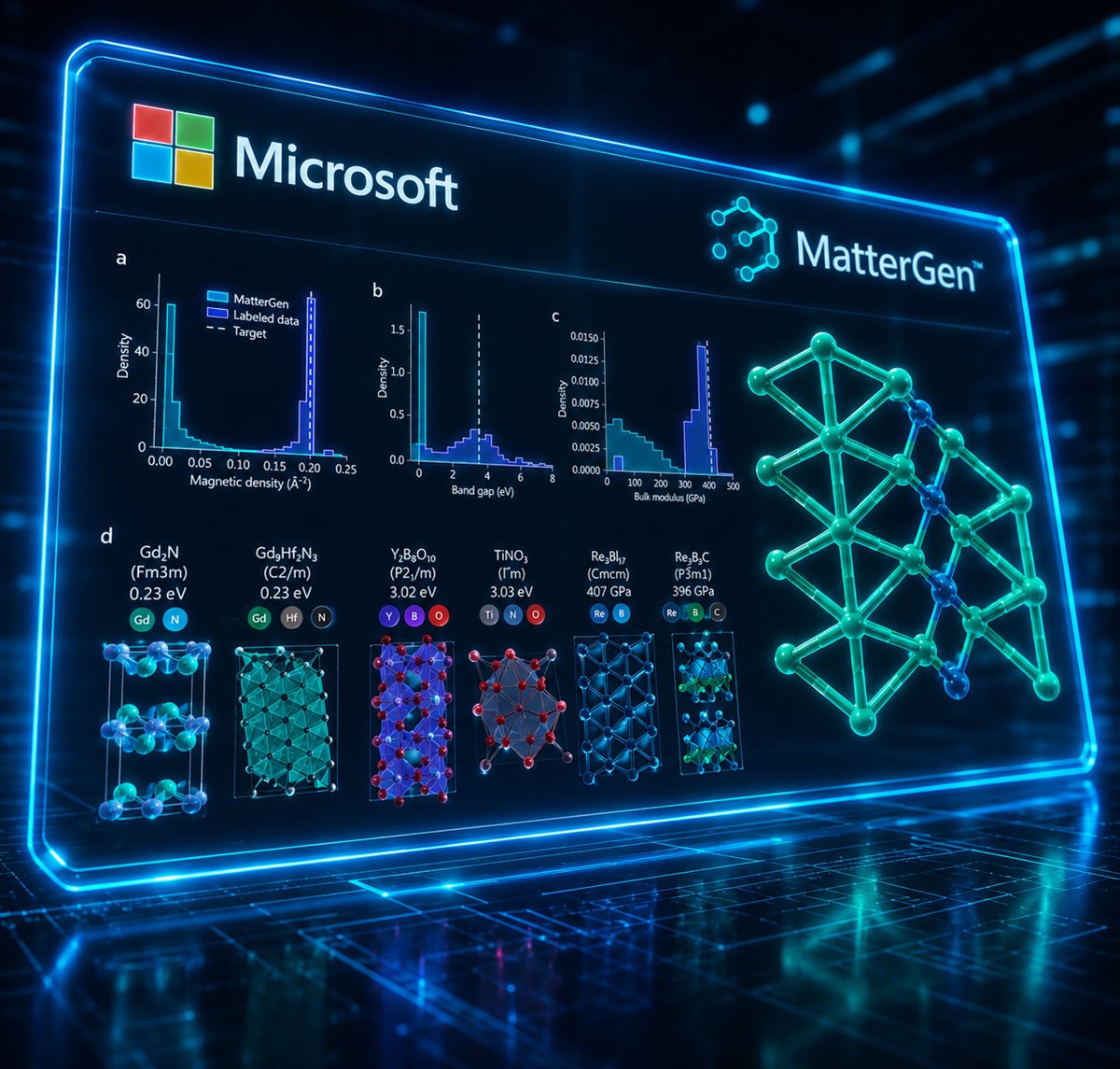
The way we discover new materials is undergoing a massive paradigm shift. Historically, finding the right compounds for next-generation innovations, like advanced batteries or efficient carbon capture systems, has been a grueling, slow process driven by trial and error. It often took years, if not decades, of laboratory experimentation to find a single viable candidate. However, as a Materials Engineering student, it has become incredibly clear to me that we are entering a brand-new era where artificial intelligence is completely changing the rules of the game.
I recently had the incredible opportunity to attend an insightful seminar at the University of Trieste, featuring Dr. Claudio Zeni, a Senior Researcher at Microsoft Research. The discussion centered on the profound impact AI is having on material design, and it truly highlighted how close we are to a technological leap.
Instead of relying on luck or endless lab repetitions, cutting-edge generative tools like MatterGen are flipping the script on traditional research. We can now essentially "prompt" an AI model by defining the exact characteristics we need, whether that means a specific bulk modulus, precise magnetic density, or other target properties. In response, the system scans possibilities across the entire periodic table to generate material candidates that are stable, entirely unique, and previously unknown.
This isn't just about speed; it's about fundamentally expanding our capabilities to solve global challenges. Being part of a new generation of engineers who get to leverage these AI-driven platforms is incredibly exciting. We are no longer just observing the future of sustainability and industrial innovation, we finally have the tools to actively build it.