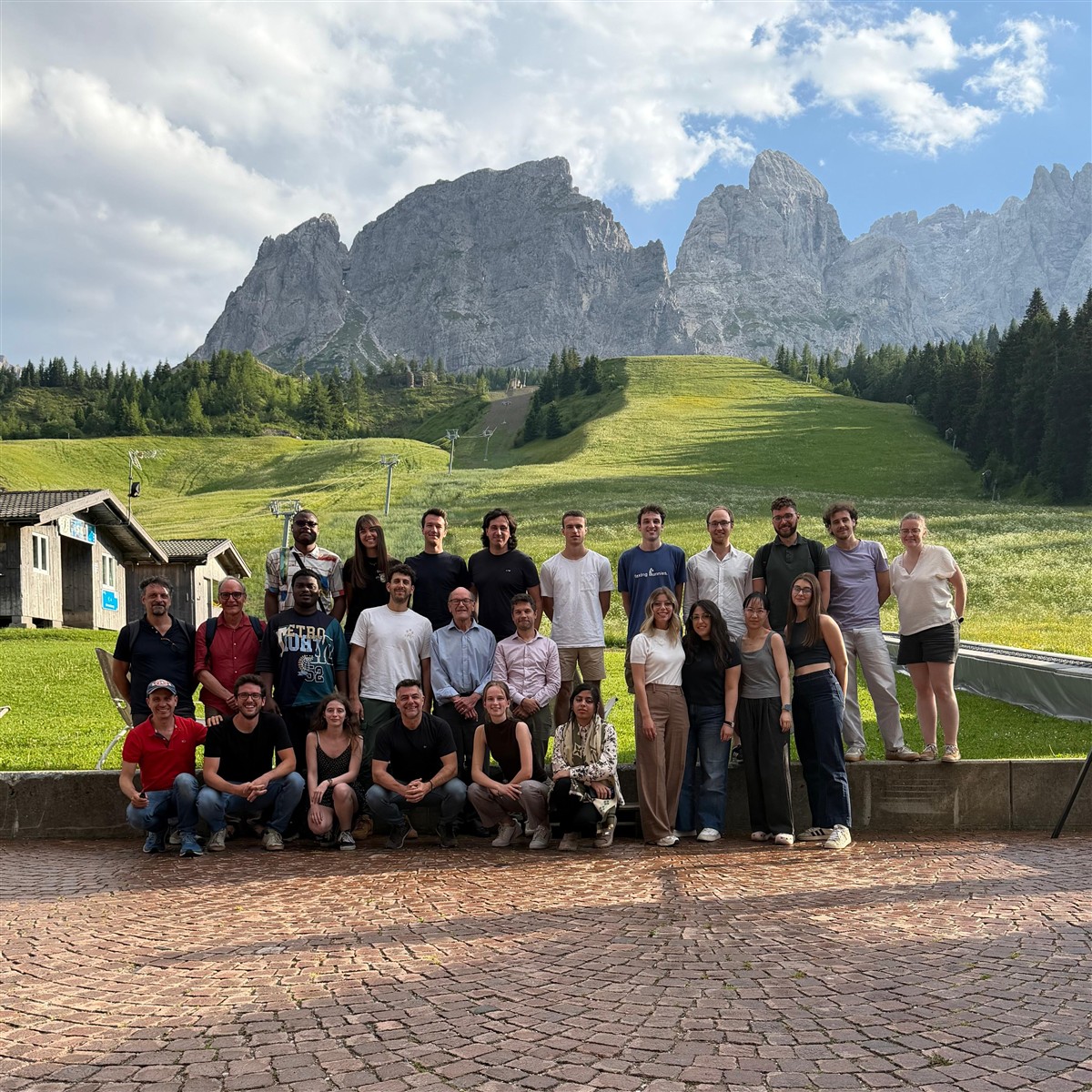
There is a precise, almost sacred moment during an educational journey when you realize you are no longer merely sitting in a lecture hall. Instead, you find yourself breathing in the very air of change. For me, that realization crystallized within the walls of the conference room at Hotel Kreuzberg, amidst the rigorous dialogues of the Summer School on Energy "Giacomo Ciamician".
Participating in this program focused on energy transition and sustainable development was far more than an academic milestone. It was a visceral influx of energy, shared visions, and, above all, a profound awakening of consciousness.
Reflecting on this transformative experience, I have woven my insights into three core pillars that now define my outlook on our shared future.
1. The Energy Transition: A Tangible Reality, Not a Distant Utopia
We are often conditioned to speak of the ecological transition as a distant mirage, a noble but utopic destination on a horizon we might never reach. The resounding truth that emerged from these intense days of study is quite the opposite: the energy transition is achievable, viable, and it is happening right now.
We do not need to wait for a future scientific miracle. The foundational puzzle pieces, the technology, the resources, and the human expertise, are already in our hands. As a passionate advocate for Key Enabling Technologies (KETs), it was exhilarating to analyze the latest breakthroughs in this field. The primary challenge of our generation is not to invent something entirely brand new from scratch; rather, it lies in the systemic application of what we already have, fueled by a collective, unwavering commitment to march decisively in the right direction.
2. A Living Canvas of Passion, Knowledge, and Synergy
The atmosphere of the Summer School could best be described as a beautifully orchestrated melting pot. Imagine a vibrant ecosystem of diverse ages, distinct backgrounds, and varied origins, all converging toward a single, harmonious purpose: to enshure the short-term as well as the long-term wellness of humankind.
Beneath this diversity lay a powerful, unifying thread: a shared, burning dedication to the energy transition and a collective urgency to confront climate change. This alignment of purpose forged a bond among us unlike anything I have ever experienced. To stand alongside individuals from entirely different corners of the world, all fighting in the exact same direction to solve the same global crisis, was profoundly moving. In that space, national borders and cultural divides dissolved, replaced by a deep, resonant sense of belonging to a single human family determined to protect our planet, our only home, through sustainable technological progress.
I felt as though I were part of a global team where every member, equipped with their unique skills and specialized expertise, was offering a vital piece of the puzzle. It was a powerful reminder that while the monumental challenges of the coming years are collective, our contributions are beautifully distinct, ensuring that together, we possess the tools to architect a sustainable dawn.
What took place was not a traditional series of top-down lectures, but a profound synergy between mentors and participants. The professors did not just teach; they transmitted a visceral, contagious passion for their disciplines, opening up a rare and monumental reservoir of knowledge and experience. I was deeply captivated by the unique atmosphere that naturally took root, a space where students, distinguished professors, and international experts could seamlessly connect far beyond the boundaries of the lecture hall.
In this environment, the rigid, traditional barrier between educator and student completely dissolved. It gave way to spontaneous, genuine conversations where complex global issues were explored with the effortless warmth and openness usually shared among close friends. I feel an immense sense of pride for having had the freedom to speak openly with these visionary minds, engaging in a fluid, reciprocal exchange of ideas. Being able to listen directly to the innovative perspectives of such profoundly cultured and intelligent mentors was an extraordinary privilege. As one of the youngest participants in attendance, I consciously chose to approach this vibrant ecosystem like a sponge, seeking to absorb every single nuance, embrace every spontaneous debate, and fully immerse myself in the intellectual wealth and human connection surrounding me.
3. Beyond the Algorithmic Echo Chamber: The Power of Human Connection
While the academic curriculum was stellar, the true heartbeat of the Summer School was the human element: my fellow travelers. I found myself surrounded by exceptionally brilliant peers, each highly specialized in their respective fields, sparking discussions that were both deeply constructive and eye-opening.
The real magic, however, lay in the international tapestry of the event. Engaging in face-to-face dialogue with people from distant corners of the globe allowed me to listen to perspectives that are routinely filtered out by mainstream news or buried by social media algorithms. Stepping outside of that digital echo chamber to look at global crises through previously invisible angles grants a sense of authentic, unfiltered global citizenship. It is a profound intellectual wealth that no digital screen will ever be capable of replicating.
As a 3rd-year Industrial Engineering student at the Università degli Studi di Trieste, my perspective has never been sharper. More than anything, this experience ignited a profound sense of responsibility. Immersed in debates with world-class experts, I realized that we cannot just sit back and wait for the future; we must build it. I truly felt the weight and the privilege of becoming an active player in the energy transition, not just as an individual making conscious daily choices, but as part of the new generation of scientists and engineers called to design a permanent, sustainable future.
Looking back at my 6 days like a sponge, absorbing every single shade of knowledge, here is the comprehensive, day-by-day account of the journey.
The Complete Chronicle: Daily Program, Lectures & Deep-Dives
🏔️ Monday, June 22nd
• 13:30 – 14:20 | Lecture: Global warming: evidence, risks and mitigation
o Lecturer: Filippo Giorgi (ICTP)
o Biography: Head of the Earth System Physics (ESP) section at ICTP in Trieste. He earned his Ph.D. at the Georgia Institute of Technology (USA). From 2002 to 2008, he was Vice-Chair of Working Group I of the Intergovernmental Panel on Climate Change (IPCC), which won the 2007 Nobel Peace Prize. He has authored over 200 peer-reviewed papers and is ranked in the top 0.5% of highly cited geoscientists globally.
o Topic Detail: Regional climate modeling and the physical realities of global climate change. The lecture laid out the undeniable empirical evidence of shifting global temperatures, the associated environmental risks, and the urgent necessity for structural mitigation strategies.
• 14:20 – 15:10 | Lecture: Regulating the energy transition in the EU in turbulent times
o Lecturer: Matteo Fermeglia (UniTS / Hasselt University)
o Biography: Associate Professor of Environmental and Climate Law at the University of Trieste and Assistant Professor in International and European Environmental Law at Hasselt University. A former visiting scholar at Columbia Law School, his research centers on climate change law, energy transition, and climate litigation. He was awarded the Raúl Estrada-Oyuela Award for Emerging Scholars in Climate Law in 2017.
o Topic Detail: Legal and policy tenets regulating the EU energy transition. The talk unpacked how ambitious policy frameworks must drive the phase-out of a 20th-century fossil-fuel "brown economy" while supporting low-carbon solutions and carbon removals, analyzing the immense legal constraints that arise during an unfolding crisis.
• 15:10 – 15:40 | Coffee break
• 15:40 – 16:30 | Lecture: Energy as a global challenge
o Lecturer: Vanni Lughi (UniTS)
o Biography: Full Professor of Materials Science and Technology at the University of Trieste. He holds a Ph.D. from the University of California at Santa Barbara (UCSB). His research at the naME Lab focuses on nanostructured materials for energy, expanding recently into the systemic, interdisciplinary aspects of renewable energy supply chains.
o Topic Detail: Framing energy as a multifaceted global challenge. This session covered the fundamental structure of the energy supply chain from raw sources to end consumers, utilizing core global data regarding production, consumption patterns, and international trading dynamics.
• 16:30 – 17:20 | Lecture: Energy transition, social (in)justice and the role of renewable energy communities
o Lecturer: Lorenzo De Vidovich (UniTS)
o Biography: Sociologist and Research Fellow at the University of Trieste, with a Ph.D. in Urban Studies from Politecnico di Milano. His research focuses on energy poverty, social inequalities, and territory-based welfare policies. In 2021, he managed the "Community Energy Map" applied research project for RSE and Luiss Business School.
o Topic Detail: Social injustices, energy poverty, and Renewable Energy Communities (RECs). The lecture treated energy systems as socio-technical setups, exploring how decarbonization can inadvertently harm weaker social groups, and how RECs act as community-driven, decentralized frameworks to involve marginalized end-users in energy co-production.
• 17:20 – 18:10 | Lecture: Stopping Climate Change: Policies for Real Zero
o Lecturer: Paul Ekins (University College London - UCL)
o Biography: Professor of Resources and Environmental Policy at the UCL Institute for Sustainable Resources. A world-renowned economist, he has served on the UK government’s energy policy advisory committee, the European Resource Efficiency Platform, and was Co-Chair of the UN’s landmark sixth Global Environment Outlook (GEO-6). He received the UN’s Global 500 Award and an OBE for services to environmental policy.
o Topic Detail: Technologies and policy structures required for a Real Zero transition. Prof. Ekins mapped out the fundamental shifts needed across transport, buildings, and heavy industries, explaining how timely public-private investments can morph the climate transition into a new era of clean economic growth and prosperity.
• 18:10 – 21:00 | Dinner
• 21:00 – 22:00 | Student pitch and self-presentation session
o Activity: An informal horizontal session designed to break the ice, allowing participants from diverse international universities to pitch their research, academic backgrounds, and personal motivations.
⛰️ Tuesday, June 23rd
• 08:00 – 14:30 | Free time - Group hike
o Activity: Networking and bonding while exploring the alpine trails around Hotel Kreuzberg.
• 14:30 – 15:20 | Lecture: The energy transition
o Lecturer: Alessandro Massi Pavan (UniTS)
o Biography: Delegate of the Rector for Sustainability and Energy Transition and Coordinator of the Giacomo Ciamician Interdepartmental Center at the University of Trieste. Professor of Electrical Engineering, his core research spans smart grids, solar tech, and electric mobility integration.
o Topic Detail: Alternative tech and economic modeling for renewable integration. The lecture outlined the role of renewable technologies in tackling 21st-century issues like poverty eradication and climate security, alongside a foundational review of the economic parameters involved in building modern power plants.
• 15:20 – 16:10 | Lecture: Energy savings and energy efficiency
o Lecturer: Fabio Morea (Area Science Park)
o Biography: Head of the Sustainability and Large Projects Office at Area Science Park in Trieste, and an expert Energy Management Engineer (EGE). With over 25 years of independent consulting and public project management experience, he holds a degree in Materials Engineering and a Ph.D. in Applied Data Science and AI.
o Topic Detail: Distinguishing energy efficiency from energy conservation. Starting from operational data, this class evaluated how minor end-use enhancements produce system-wide benefits down the supply line via what engineers refer to as the "operational spillover effect".
• 16:10 – 16:40 | Coffee break
• 16:40 – 17:30 | Lecture: Energy efficiency: an engineer’s perspective (case studies)
o Lecturer: Fabio Morea (Area Science Park)
o Topic Detail: Practical application of energy efficiency within heavy industries and large civil complexes. Through real-world energy audits, monitoring data, and project management timelines, Morea highlighted how stakeholder dynamics, technical risks, and system thinking dictate successful decarbonization planning.
• 17:30 – 18:20 | Lecture: Sustainable Resource Management through a Circular Economy
o Lecturer: Paul Ekins (UCL)
o Topic Detail: Drawing upon exclusive data from the International Resource Panel's Global Resources Outlook 2024, this lecture discussed what resource efficiency entails. It explored how circular economy frameworks must alter society's essential 'provisioning systems'—revising how populations are supplied with food, shelter, energy, and mobility.
• 18:20 – 19:10 | Lecture: The energy market
o Lecturer: Arturo Lorenzoni (UniPadova)
o Biography: Full Professor of Energy Economics and Electricity Market Economics at the University of Padova, and Research Fellow at the IEFE-Bocconi think tank. He specializes in electricity system deregulation, renewable energy subsidies, and climate change economics.
o Topic Detail: The liberalization of the European energy industry. The talk retraced the path taken since the first EU Directive in 1996 to establish a competitive, common energy market across all 28 member states, analyzing whether the resulting price changes and market shifts have truly benefited the end consumer given the massive tech transformations of the last two decades.
• 19:10 – 21:00 | Dinner
☀️ Wednesday, June 24th
• 08:30 – 09:45 | Lecture: Photovoltaic: technology and economics
o Lecturers: Alessandro Massi Pavan & Vanni Lughi (UniTS)
o Topic Detail: Technical parameters and market parity of solar energy. This joint lecture proved how solar photovoltaic systems have achieved grid parity, moving past the need for state subsidies, and demonstrating how this technology represents a primary cornerstone for humanity's future clean energy generation.
• 09:45 – 10:15 | Coffee break
• 10:15 – 11:30 | Lecture: Technological focus on Photovoltaic
o Lecturer: Giovanni Spagnuolo (UniSalerno)
o Biography: Full Professor of Electrical Engineering at the University of Salerno and an d'élite IEEE Fellow. Named among the "Most Influential Scientific Minds" by Thomson Reuters in 2015, he is the national coordinator for the Italian Ph.D. course in Photovoltaics and co-author of 5 patents and over 200 papers focused on power electronics control.
o Topic Detail: Power electronics, circuit topologies, and Maximum Power Point Tracking (MPPT) control actions. The lecture outlined the role of switching converters (DC-DC, DC-AC, AC-DC) in maximizing solar power output, managing battery inputs, and maintaining grid synchronization.
• 11:30 – 12:45 | Lecture: Technological focus on Monitoring and Maintaining Solar Power for a Brighter Future
o Lecturer: Emanuele Ogliari (Polimi)
o Biography: Associate Professor at the Department of Energy at Politecnico di Milano, where he directs the Photovoltaic-based Systems Lab. He received his Ph.D. in Electrical Engineering in 2016 and focuses on predicting renewable power production through computational intelligence, machine learning, and neural network algorithms.
o Topic Detail: Diagnostic performance assessment tools for solar arrays. The lecture focused on calculating normalized efficiency indexes and the Performance Ratio (PR). Ogliari showed real-world case studies detailing early plant inspection methods, including the technical analysis of "Snail Trails"—degradation phenomena that can hinder panel performance over time.
• 12:45 – 15:20 | Free time
• 15:20 – 16:10 | Lecture: Life Cycle Assessment for Photovoltaic Systems
o Lecturer: Patrizio Manganiello (Hasselt Univ. / imec / EnergyVille)
o Biography: Associate Professor and Senior Researcher in Belgium. His expertise spans device-level power electronics, architectural hardware reliability, and system-level life-cycle thinking applied to advanced Building Integrated Photovoltaics (BIPV).
o Topic Detail: Utilizing Life Cycle Assessment (LCA) to move past simplified claims regarding green tech. Students explored system boundaries, carbon footprints per kWh, manufacturing degradation, energy payback times, and the recycling or environmental disposal of materials and backup chemical batteries at the end of a system's life cycle.
• 16:10 – 17:00 | Lecture: Technological focus on Hydroelectric Power
o Lecturer: Nicola Fergnani (Polimi)
o Biography: Adjunct Professor of Renewable Energy Sources at Politecnico di Milano and researcher specializing in fluid dynamics and cogeneration. He manages an industrial start-up focused on low-head hydro plants and Archimedean Screw Generators, and oversees Virtual Power Plant (VPP) residential battery networks for sonnen Italy.
o Topic Detail: Principles of hydro power plants operation, classification, and hydraulic machine selection. Fergnani outlined how hydropower provides over four-fifths of the world's renewable electricity, explaining its role as a flexible source capable of responding to grid fluctuations within minutes while offering seasonal energy storage via reservoirs.
• 17:00 – 17:30 | Coffee break
• 17:30 – 18:20 | Lecture: Hydrogen economy and the colors of hydrogen
o Lecturer: Elena Barbera (UniPadova)
o Biography: Assistant Professor in Chemical and Process Engineering at the University of Padova. Her research highlights sustainable industrial chemical processes, carbon capture, techno-economic process simulation, and biological hydrogen generation via photofermentation.
o Topic Detail: Technical analysis of hydrogen as a clean energy vector. Barbera systematically evaluated the production routes that dictate the environmental classification "colors" of hydrogen (grey, blue, green, yellow), comparing their raw feedstock requirements, energy efficiencies, and true carbon footprints relative to conventional fossil fuels.
• 18:20 – 19:10 | Lecture: Sustainability indicators
o Lecturer: Paul Ekins (UCL)
o Topic Detail: Defining and calculating core indicator metrics for measuring the overall quality, eco-impact, and true cost of energy deployment. These act as the fundamental analytical tools needed by public and corporate bodies to guide multi-decade investment policies.
• 19:10 – 21:00 | Dinner
🏔️ Thursday, June 25th
• 08:30 – 15:00 | Free time - Group hike to the Tre Cime di Lavaredo
o Activity: An unforgettable high-altitude hike to one of the most iconic landscapes in the Alps, fortifying our team synergy outside the lab.
• 15:00 – 15:50 | Lecture: Enabling technologies for electrification: switching converters
o Lecturer: Giovanni Spagnuolo (UniSalerno)
o Topic Detail: Technical data and commercial specifications of power electronic interfaces. Spagnuolo detailed how advanced switching converters manipulate power vectors within smart grid designs, providing a vertical look at control actions for battery interfaces and localized grid balancing.
• 15:50 – 16:40 | Lecture: Enabling Technologies for Electrification: Micro and Nanogrids
o Lecturer: Maria Carmela Di Piazza (CNR - INM Palermo)
o Biography: Research Director at the Italian National Research Council (CNR) and former Head of the Palermo branch of the Institute of Marine Engineering (INM). An IEEE Senior Member, she has led numerous national and EU projects on electric transport systems, marine renewables, and smart microgrid optimization.
o Topic Detail: Structural advantages of electrical micro- and nanogrids in modern distribution networks. The lecture outlined decentralized power generation, the resilience of DC power distribution architectures, and the localized orchestration of Energy Management Systems (EMSs) to increase overall electrical grid reliability.
• 16:40 – 17:05 | Coffee break
• 17:05 – 18:20 | Lecture: Technological focus on energy storage and battery technologies
o Lecturer: Walter Zamboni (UniSalerno)
o Biography: Associate Professor of Electrical Engineering and Director of the ESESlab (Energy Storage and Energy Sources Laboratory) at the University of Salerno. He has conducted research at CERN (Geneva) and EPFL (Switzerland), specializing in the mathematical modeling, spectroscopy, and diagnostics of lithium-ion batteries and fuel cells.
o Topic Detail: Vertical lecture on rechargeable batteries from individual chemical cells to complex utility-scale systems. Zamboni presented fundamental internal metrics (capacity, voltage, resistance, impedance) and state variables like State of Charge (SoC) and State of Health (SoH), synthesizing them into a clear equivalent electric circuit model.
• 18:20 – 19:10 | Lecture: Energy Management Systems
o Lecturer: Nicola Blasuttigh (UniTS)
o Biography: Assistant Professor at the University of Trieste and Associate Editor for the IEEE Journal of Photovoltaics. He earned his Ph.D. with an award-winning thesis focused on 3E (energy, economic, environmental) evaluation and optimization strategies for integrating Electric Vehicles into localized grids and RECs.
o Topic Detail: The software logic driving Energy Management Systems (EMS) in industrial and residential sectors. The lesson classified EMS frameworks based on scale and control strategy, showcasing real-world implementations that integrate solar generation and battery storage to drive down peak demand costs and grid stress.
• 19:30 – 21:00 | Dinner
• 21:00 – 21:50 | Lecture: Chemical and biological CO2 reduction for efuels production and for carbon sequestration
o Lecturer: Alberto Bertucco (UniPadova)
o Biography: Full Professor of Chemical Engineering and Director of the Interdepartmental Research Centre “Levi Cases” at the University of Padova, which unifies 11 engineering and economic departments. He is an expert in bioreactor scaling, biofuels, and industrial circular economy process engineering.
o Topic Detail: The industrial mitigation of carbon emissions through direct chemical hydrogenation and biological $CO_2$ reduction. The lecture evaluated first and second-generation bioethanol/biodiesel, focusing closely on microalgae cultivation as an efficient method to capture solar light and trap carbon into dense biomass, while introducing the strict Energy Return on Energy Invested (EROEI) index.
🧗 Friday, June 26th
• 08:30 – 14:30 | Free time - Rock climbing
o Activity: Testing our physical limits and problem-solving skills on the rock faces of the Dolomites.
• 14:30 – 15:20 | Lecture: Wind Energy at Scale: Scientific, Environmental, and Societal Challenges
o Lecturer: Carlo Luigi Bottasso (Technical University of Munich - TUM)
o Biography: Chair of Wind Energy and Founding Director of the Wind Energy Institute at TUM (Germany). A world-renowned scientist, former president of the European Academy of Wind Energy (EAWE), and Editor-in-Chief of Wind Energy Science, he has published over 500 papers and received the EAWE Scientific Award for pioneering aero-servo-elastic wind turbine designs.
o Topic Detail: Scaling up wind power into a central pillar of electricity supply. Prof. Bottasso explained that moving to extreme structural scales requires a deeper understanding of atmospheric dynamics and turbine aero-elastic behavior, while highlighting necessary research into wind farm interactions with local ecosystems and rural communities.
• 15:20 – 16:10 | Lecture: the total cost of ownership as a decision-making metric
o Lecturer: Mariangela Scorrano (UniTS)
o Biography: Assistant Professor in Applied Economics at the University of Trieste, specializing in transport economics, consumer choice modeling, and the economic integration between electric mobility charging and localized renewable sources.
o Topic Detail: The mathematical model underlying the Total Cost of Ownership (TCO) metric. Using a custom parametrized Excel simulation tool built on real-world market metrics, Scorrano demonstrated how TCO serves as a vital tool to compare different automotive propulsion choices (ICE vs. EV).
• 16:10 – 17:00 | Lecture: Decarbonising Transport: an economic perspective
o Lecturer: Romeo Danielis (UniTS)
o Biography: Full Professor of Applied Economics at the University of Trieste. He has chaired the Italian Economics Society of Transportation and Logistics (SIET) and served on the editorial board of prominent journals like Transportation Research Part A.
o Topic Detail: Fleet electrification strategy across diverse scales of mobility. The lecture evaluated the technical and economic capabilities of motorbikes, passenger cars, delivery vans, urban buses, heavy trucks, maritime shipping, and aviation, focusing on market price dynamics and grid stability regulations.
• 17:00 – 17:30 | Coffee break
• 17:30 – 18:20 | Lecture: Environmental impact of energy sources
o Lecturer: Andrea Mio (UniTS)
o Biography: Contract Professor of Process Simulation and Dynamics of Chemical Processes at the University of Trieste, with a Ph.D. in Nanotechnology. He works directly with key Life Cycle Thinking stakeholders to improve digital process simulation tools for product sustainability evaluation.
o Topic Detail: Analyzing the evolution of the European energy mix over the last 25 years. Through an interactive LCA computation, the lecture demonstrated why Life Cycle Assessment is the most powerful tool available to quantify the true environmental tradeoffs and impacts of different energy generation choices.
• 18:20 – 19:10 | Lecture: Raw materials in the energy transition
o Lecturer: Alois Bonifacio (UniTS)
o Biography: Associate Professor of Analytical Chemistry and member of the PhD School Board in Nanotechnology at the University of Trieste. Alongside advanced biomedical Raman spectroscopy, he explores the chemical interconnections shaping modern economics and global resource supply lines.
o Topic Detail: The chemical elements making a technical difference in clean energy hardware. Bonifacio traced where critical raw materials for semiconductors, wind magnets, and battery chemistry come from, shifting from chemical properties to complex geopolitical, environmental, and human rights issues tied to extraction.
• 19:10 – 21:00 | Dinner
🎓 Saturday, June 27th
• 10:00 – 12:00 | Group presentations on “hot topics”
o Activity: A collaborative workshop session where student teams presented their interdisciplinary findings on debated energy issues, cross-examining their engineering proposals with social, economic, and political constraints.
My group—composed of Laura, Eva, Federico, and myself—was assigned the following "hot topic":
Data Center – Germany Germany is planning to build a data center in the municipality of Manheim. As part of a team advising the local municipal government, your task is to identify possible options and discuss one specific strategy. The goal is to minimize energy, environmental, social, and economic impacts, potentially through seamless integration into the urban environment.
I thoroughly enjoyed working alongside my teammates. We had a wonderful time collaborating, which sparked a wealth of truly creative ideas. Ultimately, even though we did not win the main competition, we were deeply honored to be presented with the "AURA AWARD."
• 12:00 – 13:00 | Final remarks
o Speaker: Prof. Vanni Lughi (UniTS)
o Topic: Synthesizing the week's insights and delivering a final message regarding our roles as future professionals in the ongoing transition.
• 13:00 – 14:00 | Final exam
o Activity: The official comprehensive examination evaluating our grasp of the technical, thermodynamic, economic, and social topics covered during this residential school.
Toward a Shared Legacy of Progress
I return home physically spent, the natural consequence of a relentless schedule, rigorous alpine climbs, and intellectually demanding debates; yet I am profoundly revitalized in spirit and mind. Energy has always been the lifeblood of human civilization, but today, more than ever, its critical nature is laid bare. We stand at a historic crossroads, facing a systemic crisis that demands a swift, decisive evolution toward electrification, decentralized grids, and total decarbonization. Our current decisions are not just policy adjustments; they are foundational choices that will dictate the short- and long-term well-being of all humankind.
In this monumental endeavor, science and technology are only half the battle. The true catalyst for change is awareness. Photovoltaics serves as a perfect testament to this reality: today, harvesting electricity directly from the sun is far more cost-effective than relying on traditional utility companies. Yet, a vast majority of families and enterprises continue to lose financial resources simply because they do not know. The barrier we face is no longer technical; it is a deficit of public consciousness.
This is precisely where the Summer School on Energy "Giacomo Ciamician" fulfills its profound purpose. It has equipped us not only with rigorous scientific knowledge but with the realization that sustainable development is a tangible, actionable blueprint we are already constructing together. The school’s true mission now becomes our own: to act as ambassadors of this truth and to fiercely spread this awareness within our communities. As future professionals, scientists, and global citizens, we are explicitly called to face this urgent planetary challenge.
My deepest gratitude goes to the visionary organizers: Prof. Vanni Lughi, Prof. Nicola Blasuttigh, and Prof. Alessandro Massi Pavan, for orchestrating an unforgettable experience that has inspired us to architect a permanent, thriving future. The global energy transition is a formidable, intricate puzzle. Yet, after six transformative days in the peaks of the Alps, I return with my feet firmly planted on the ground and my head in the clouds, ready to step up as an active player, eager and prepared to do my part in this new dawn.