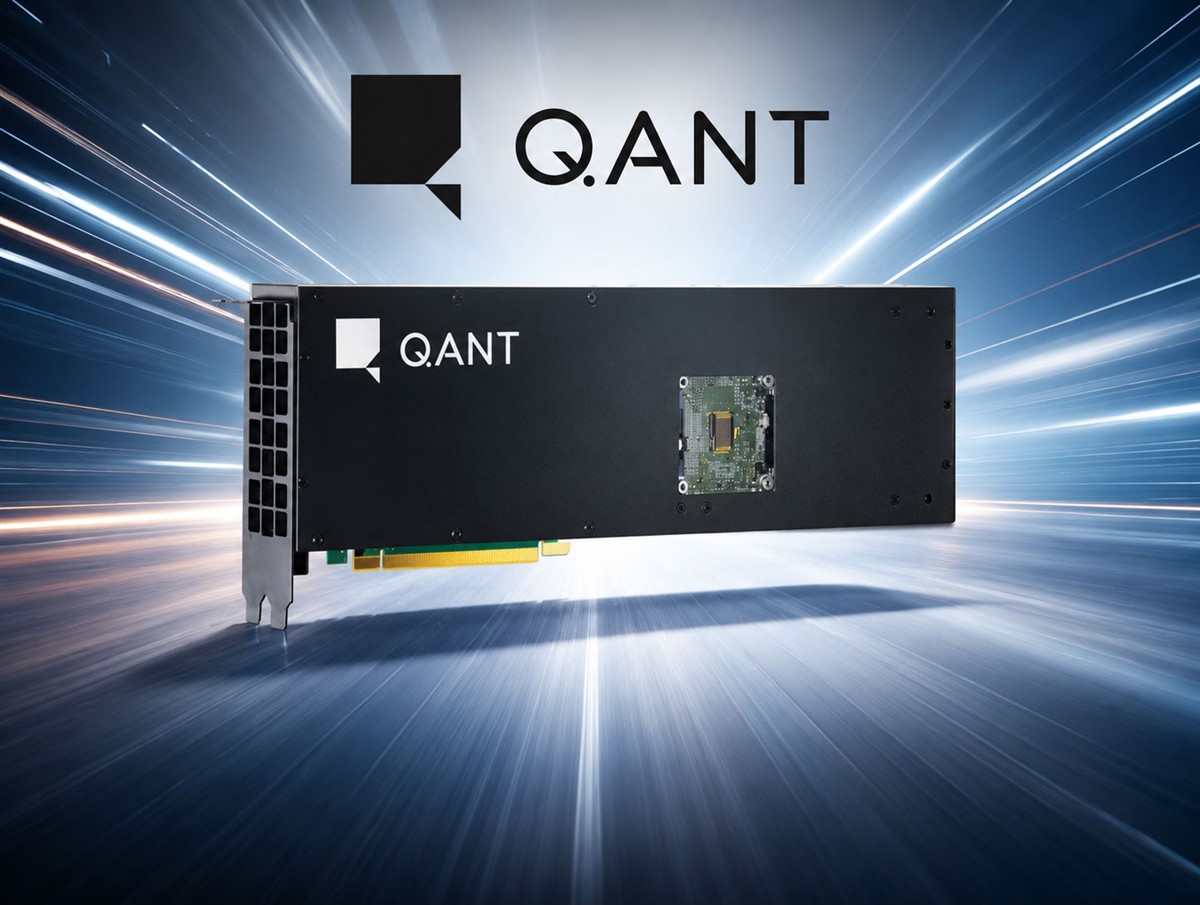
The tech industry is facing a quiet but catastrophic reality: traditional silicon architecture has reached its physical limits. As Moore’s Law grinds to a halt, our reliance on conventional processors is turning into an environmental crisis. Today's massive AI demands are driving energy consumption to unsustainable levels, with a staggering 40% of data center power spent not on processing calculations, but simply on cooling systems to prevent hardware from melting. When a single major AI infrastructure consumes roughly 564 megawatt-hours every day, it becomes clear that we are no longer looking at engineering progress, we are dealing with a critical bottleneck.
Fortunately, the solution isn't just faster silicon; it’s an entirely different medium: Native Photonic Computing.
By shifting from electricity to light, Thin-Film Lithium Niobate on Insulator (TFLNOI) technology is completely redefining high-performance computing. While digital microchips struggle against the infamous "Memory Wall," German innovator Q.ANT has harnessed the Pockels Effect to manipulate light using electric fields.
The data behind this shift speaks for itself:
Massive Efficiency Gains: A standard 8-bit digital operation requires 2300 fJ, whereas the same operation on TFLNOI consumes a mere 76 fJ.
Unprecedented Speed: Q.ANT’s second-generation Neural Processing Unit achieved a 50x performance leap in just 12 months, a milestone that would take standard digital hardware a decade to reach.
Inherent Power: Thanks to native nonlinearity, a single optical component can replicate the workload of a thousand traditional transistors.
This isn't just theoretical laboratory research. This technology is already active and deployed within the Leibniz Supercomputing Centre (LRZ). It fits seamlessly into standard data center racks and integrates fully with Python. By executing complex matrix operations and scientific simulations at the speed of light with zero heat generation, photonics is bridging the gap between advanced material science and the next era of computing. The future isn't just faster, it's brighter.